
Aluminium casting matters because it turns a lightweight, corrosion-resistant metal into complex, repeatable parts at scale—often with lower tooling risk than machining everything from solid. If you’re buying parts, the practical takeaway is simple: pick the casting method that matches your volume, strength needs, surface finish, and tolerance, and you’ll usually land at the best cost-performance point.
With this context in mind, this guide offers a procurement-friendly breakdown of aluminium casting. It helps you make informed decisions about what aluminium casting is, the main process types, uses, and real-world applications. By the end, you will be able to choose the right casting method for your project’s volume, strength, surface finish, and tolerance needs, achieving the best cost-performance ratio.
What Is Aluminium Casting?
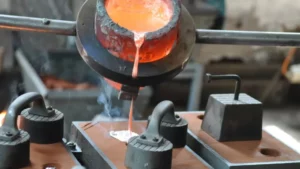
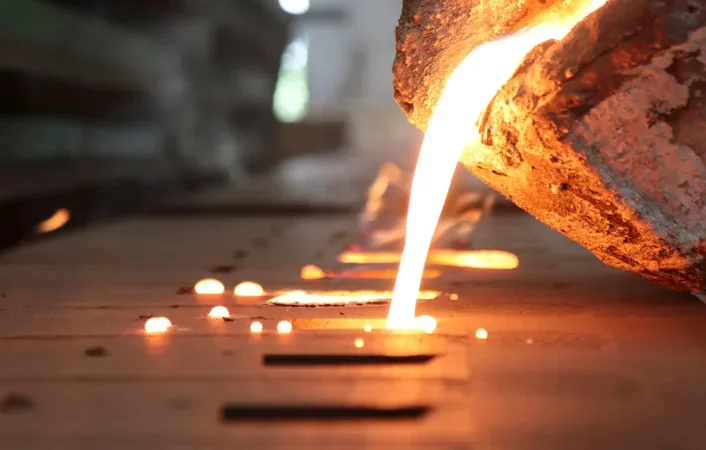
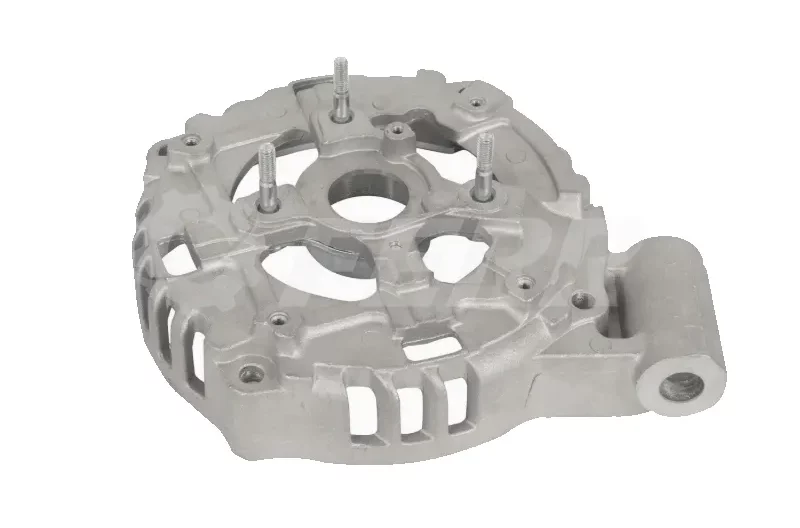
Aluminium casting is a manufacturing process where aluminium or an alloy is melted and poured or injected into a mold. After it solidifies, you remove the part and perform trimming, heat treatment, machining, or surface finishing as needed.
From a buyer’s angle, aluminium casting is popular for four reasons:
- It makes complex shapes that would be expensive or slow to machine. For example, using aluminium casting can reduce manufacturing costs by up to 30% compared to machining.
- It supports consistent repeat production once the mold/tooling is validated, usually resulting in a reduction of approximately 20% in production time.
- Aluminium offers a strong middle path: it is lightweight, resists corrosion, and has good thermal conductivity, typically enhancing component life by 15% in harsh environments.
- It is recyclable, with scrap recovery common in casting. This can lead to an average material cost savings of about 10%.
Different Types of Aluminium Casting Processes
Aluminium can be cast in many ways. Each method depends on the required control over filling, cooling, and repeatability, as well as your budget.
Die Casting (High-Pressure Die Casting)
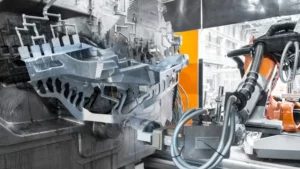
Molten aluminium is injected into a hardened steel mold under high pressure.
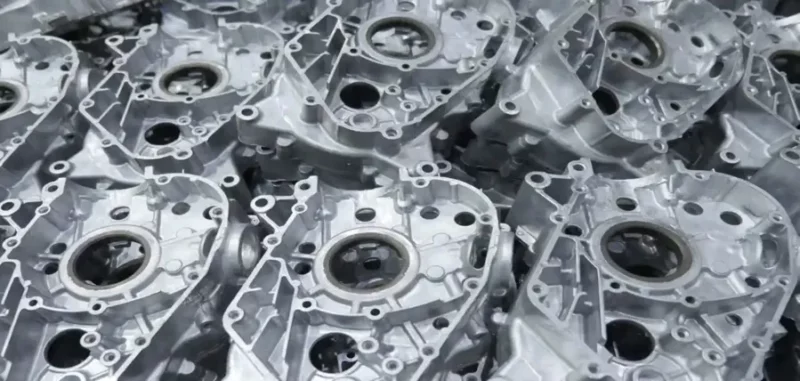
This is the industrial-scale option: fast cycles, consistent dimensions, and excellent repeatability once the tool is set. It is widely used for parts that need to look clean and assemble smoothly with minimal post-work. For example, in the automotive industry, gearbox housings produced at 30 seconds per cycle demonstrate the effectiveness of high-pressure die casting for quality and efficiency.
Best for: high volume, thin walls, stable quality, good surface finish. Trade-offs: Requires higher investment in tooling; if the process is not well controlled, internal porosity may develop, which negatively affects sealing, welding, or applications needing very high integrity.
Investment Casting (Lost-Wax Casting)
A wax pattern is coated with ceramic, the wax is removed, and molten aluminium is then poured into the cavity.
Investment casting earns its place when geometry is detailed, and you’d rather pay for precision than for heavy machining later.
Best for: fine features, complex shapes, lower-to-medium volumes with “detail-first” requirements. Trade-offs: Generally has a higher unit cost than sand casting, and lead times are longer due to the complexity of pattern and mold preparation.
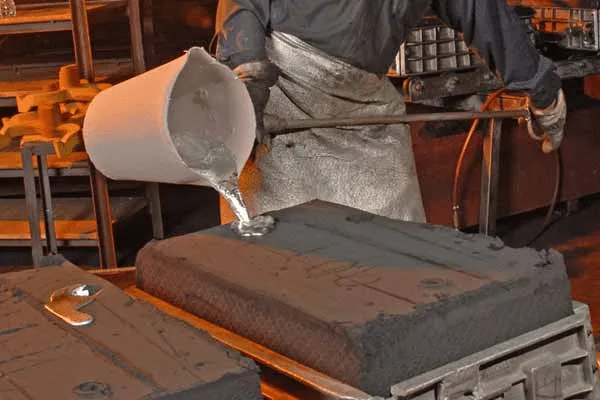
Sand Casting
Molten aluminium is poured into a sand mold made from a pattern.
This is the most flexible method when you need to iterate on designs or make large parts without expensive steel tooling. Sand casting allows rapid mold adjustments, often with pattern updates in 48 hours. This quick turnaround is ideal for development teams who need to refine and test designs efficiently.
Best for: prototypes, low-to-medium volume, larger parts, design changes. Trade-offs: Produces a rougher surface finish and wider tolerances than other methods; this often requires extra machining to meet tight specifications.
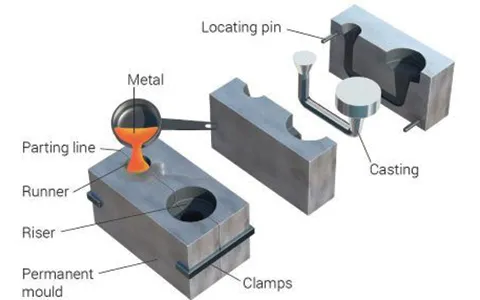
Permanent Mold Casting (Gravity Die Casting)
Molten aluminium is poured into a reusable metal mold using gravity.
Compared with sand casting, you typically get better consistency, a nicer surface, and often improved mechanical properties because cooling is more controlled.
Best for: medium volumes, better repeatability, and a cleaner finish than sand casting.
Trade-offs: less flexibility than sand molds; tooling cost is higher than sand patterns.
Lost Foam Casting
A foam pattern is embedded in sand; molten aluminium vaporizes the foam and replaces it.
It is a smart option when you want complex shapes without building complicated cores, especially if part consolidation is the goal.
Best for: complex shapes, fewer assembled pieces, and some automotive-style geometries.
Trade-offs: quality depends heavily on foam pattern consistency and gating design.
Shell Mold Casting
A resin-coated sand shell forms the mold surface, giving a smoother cavity than conventional sand molds.
Best for: improved surface finish and accuracy over traditional sand casting. Trade-offs: Can’t deliver as tight tolerances as die casting, and the process and materials are more expensive than standard sand casting, impacting cost efficiency.
Vacuum Die Casting
A variation of die casting that uses a vacuum to reduce trapped air during filling.
If you have had porosity issues with die casting, vacuum die casting is often the next step to improve part density and stability. It can halve the scrap rate compared to standard pressure methods, showing a clear advantage in defect reduction. Supplier capability matters more than the method name. It handles fine detail and stable geometry, making this method useful for specialty precision requirements.
Best for: detailed parts, certain precision, or surface requirements.
Trade-offs: not the cheapest option; performance depends on supplier experience.
Plaster Mold Casting
Plaster-based molds can produce good surface detail and thin-wall features.
Best for: low-to-medium volume parts where finish and detail are priorities. Trade-offs: Mold preparation takes longer than other methods, and this process is not well-suited to all alloys or to applications demanding the highest output rates.
Centrifugal Casting
The mold rotates, so centrifugal force helps distribute molten metal and can improve density in suitable shapes.
Best for: ring-shaped or cylindrical parts that benefit from improved density. Trade-offs: Only works for parts with round or cylindrical geometry, so it cannot be used for most other shapes.
Open Mold Casting
A broad, simple category where molten aluminium is poured into an open cavity mold.
Best for: basic shapes and quick trials.
Trade-offs: Provides limited control over dimensional accuracy and surface finish, so machining is often required afterward to achieve precision features or smooth surfaces.
Whichever method you choose, use this quick checklist with suppliers to validate process control before considering price: 1. Can you provide sample parts that demonstrate your capability? 2. How is your inspection flow managed to ensure quality? 3. What measures are in place to control porosity, shrinkage, and dimensional stability? A cheap quote without process proof is usually a delayed shipment in disguise.
Having explored process selection, it’s important to step back and ask: Why is aluminium casting so important, and what unique value does it offer compared to other methods?
Aluminium casting is important for one core reason: it’s one of the fastest ways to turn “good engineering intent” into a real, repeatable part—without forcing you into the cost and lead time of machining everything from solid.
Advantages of Aluminium Casting
A Lightweight and Durable Solution
Aluminium gives you a strong strength-to-weight advantage for many industrial parts. Casting makes this more useful by letting you put material only where needed: ribs, bosses, internal supports, and integrated features. or buyers, this usually shows up as:
- lower total part weight (and sometimes lower shipping/handling cost),
- easier assembly,
- and better product competitiveness when weight matters.
Corrosion Resistance and Thermal Conductivity
Many aluminium alloys perform well in everyday environments, and their natural corrosion resistance can reduce the need for heavy coatings in some applications.
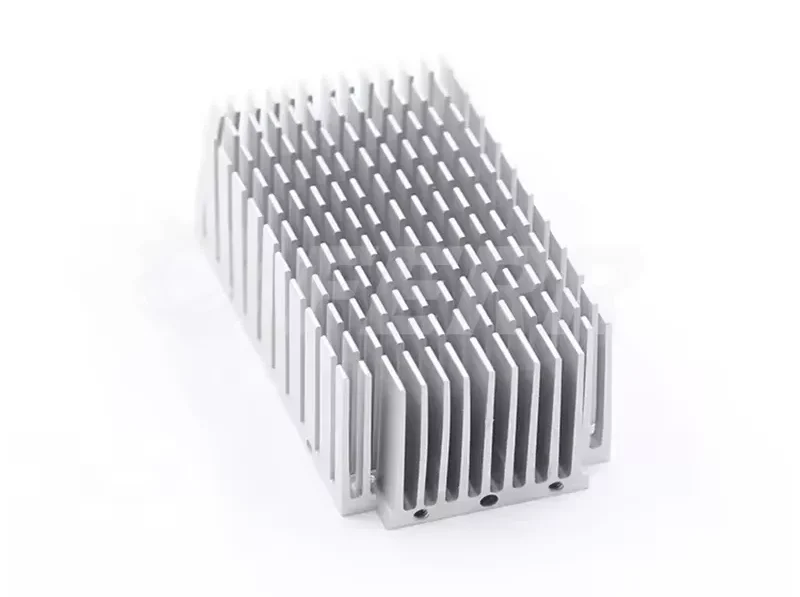
Thermal conductivity is another quiet advantage: aluminium castings can pull heat away from sensitive components, which is why you see them in housings, motor components, lighting parts, and electronics enclosures.
Cost Efficiency and Recyclability
Casting is often the most economical way to produce complex shapes repeatedly—especially when you move beyond prototypes and into stable production.
Aluminium is highly recyclable, and scrap recovery is common, supporting cost efficiency and sustainability goals. To ensure compliance, procurement engineers should request supplier documentation or third-party certifications verifying recycled content.
After discussing benefits, it’s useful to address a practical property: what is the tensile strength of cast aluminium, and how should buyers approach this topic?
There is no single tensile strength value for cast aluminium. Strength depends on:
- alloy selection,
- heat treatment condition,
- part thickness and cooling rate,
- and casting integrity (porosity and inclusions reduce real performance).
A procurement-frienA procurement-friendly way to use this fact: if strength is a key requirement, don’t accept a generic “material equals performance” promise. Ask for the target alloy and condition, and request test evidence or a pilot validation plan tied to your part geometry and acceptance criteria. Consider using a test-plan template and suggesting key tensile bars or coupon geometries for the pilot validation. Referring to a standard such as ASTM B557 can make the advice instantly actionable.
Industries That Benefit From Aluminium Casting
Automotive: Precision and Performance
Automotive loves aluminium casting because vehicles are constantly in a battle between weight, cost, performance, and production volume. Aluminium castings are used in engine and transmission-related components, structural brackets, housings, and many subsystems, where reducing weight improves efficiency.
Casting also supports design consolidation: instead of assembling multiple stamped or machined pieces, you can often cast a more integrated part—reducing assembly time and potential failure points.
Aerospace: High-Performance Components
Aerospace is more selective—quality systems, traceability, and verification matter. Aluminium casting can still be valuable for specific components that require weight reduction and consistent geometry, especially when paired with appropriate inspection and validation.
The key point: aerospace applications don’t forgive sloppy process control. The method matters, but the supplier’s quality discipline matters more.
The Role of Aluminium Castings in Electronics
Electronics and electrical equipment often require two things at once: protection and heat management. Aluminium castings are used for:
- enclosures that shield and protect,
- housing that manages heat,
- and structural frames that need stiffness without excessive weight.
When buyers talk about “good quality” here, they usually mean:
- clean surface finish (for coatings and aesthetics),
- stable dimensions (for assembly),
- and predictable thermal performance (for reliability).
Additional Industries Where Aluminium Casting Is Common
Because you asked to broaden applications beyond the “big three,” here are practical places aluminium casting keeps showing up:
- Renewable energy & power equipment: housings, structural mounts, inverter-related hardware
- Marine and coastal equipment: corrosion resistance helps (alloy choice and coating still matter)
- Industrial machinery: pump bodies, gear housings, covers, fixtures
- Construction hardware: brackets, connectors, architectural components
- Medical and lab equipment: frames, housings, portable device structures (when compliance and cleanliness requirements fit)
- Consumer goods & appliances: cookware components, appliance housings, handles, decorative-structural parts
- Robotics and automation: lightweight arms, mounts, motor housings, custom brackets for tight spaces
FAQ
What are the common uses of aluminium?
Aluminium is commonly used in transportation, electronic housings, industrial equipment, construction components, heat-dissipation parts, and consumer goods. Its “default advantage” is versatility: it can be lightweight, corrosion-resistant, and manufacturable at scale.
Why is aluminium commonly selected for casting?
Aluminium casts well into complex shapes, supports high-volume production (especially through die casting), and offers a strong balance of weight, durability, corrosion resistance, and thermal conductivity. It often hits the best overall cost-performance point for many functional parts.
Which industries benefit most from aluminium casting?
Automotive, aerospace (select applications), and electronics are major beneficiaries. Beyond that, industrial machinery, energy equipment, marine/coastal hardware, construction, medical devices, and consumer appliances frequently use aluminium castings for the same reason: lightweight performance with scalable manufacturing.
How does aluminium die casting differ from other casting methods?
Die casting injects molten aluminium into a steel mold under pressure, enabling high repeatability, faster cycle times, thinner walls, and a better surface finish—ideal for volume production. Other methods (like sand casting or investment casting) can be better for large parts, lower volume, or intricate geometry, but often with different trade-offs in finish, tolerance, and cost.
Can aluminium castings be recycled?
Yes. Aluminium is widely recyclable, and recycling is economically meaningful in many casting supply chains. In practice, how “recycled” your part can be depends on alloy requirements, performance targets, and any compliance constraints.
What are the future development trends in the aluminium casting industry?
Expect continued growth in lightweighting-driven markets, more emphasis on low-defect production (porosity control), and stronger sustainability pressure (energy efficiency and recycled content where feasible). On the buyer side, supplier selection will increasingly favor those who can prove capability with process data, inspection discipline, and stable delivery—not just low quotes.