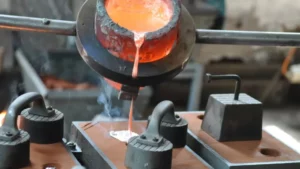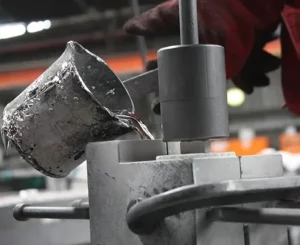

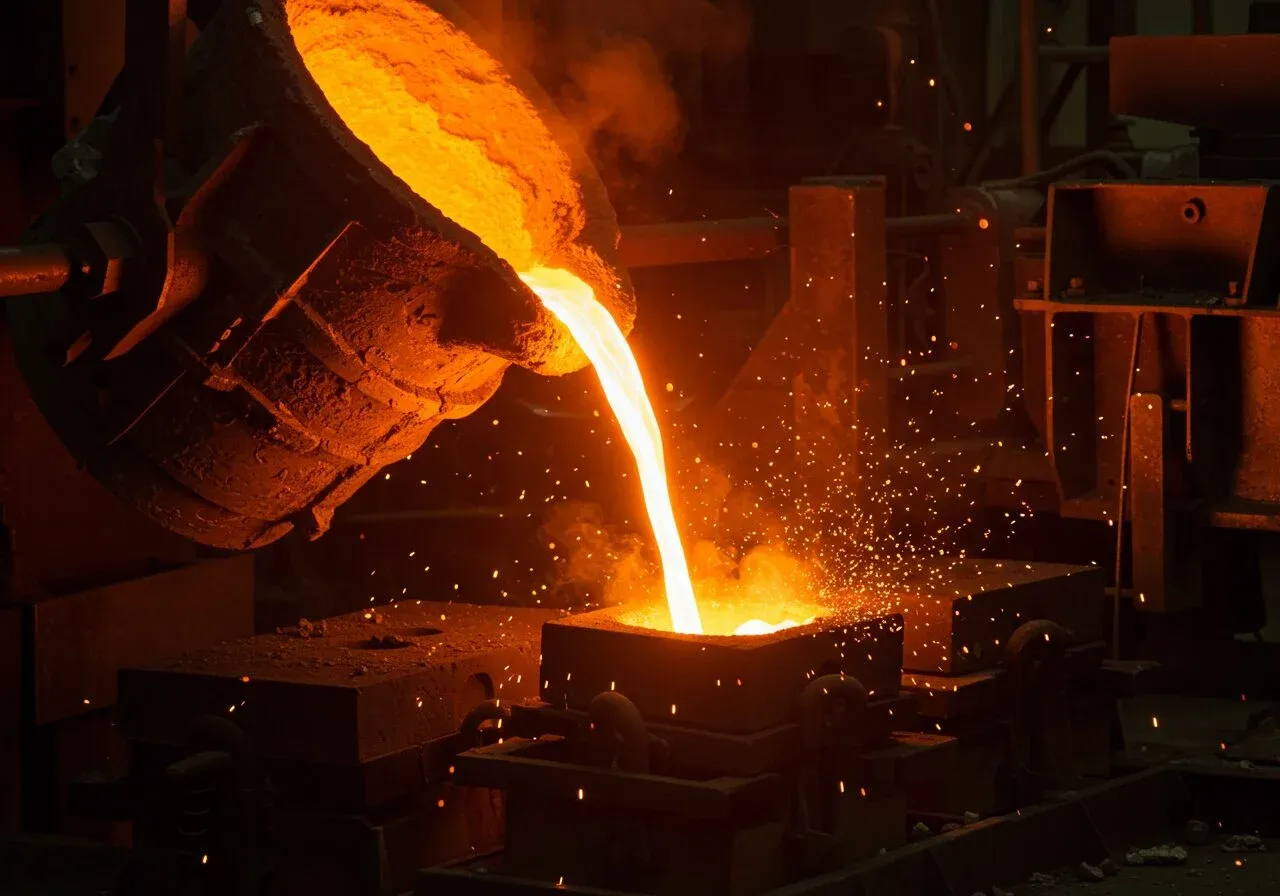
Aluminum casting forms near-net-shape parts by pouring or injecting molten aluminum alloy into a mold, allowing it to solidify, then removing and finishing the component.
For industrial buyers, this is one of the most efficient ways to get lightweight, corrosion-resistant parts with complex shapes and tight tolerances.
Compared with machining everything from a solid bar, aluminum casting:
- Saves material and machining time on complex geometries
- Offers a good balance of strength, weight, and corrosion resistance
- Supports both small batches and very high-volume automated production
- Works with a wide range of alloys for different strengths, fluidity, and temperature requirements
Most structural housings, brackets, motor bodies, and lightweight covers in automotive, electronics, and machinery are cast aluminum. In many projects, the key decision is which casting process and alloy to use, along with the trade-offs you accept in cost, accuracy, surface quality, and mechanical properties.
To simplify decision-making, directly compare casting processes: prioritize high-pressure die casting with finishing treatments if surface finish is critical; select sand casting for lower initial tooling investment. Sand casting and permanent-mold casting are best suited to larger parts, while high-pressure die casting supports fast, consistent, high-volume runs. For parts demanding mechanical strength, low-pressure die casting’s controlled flow and defect reduction stand out.
A professional foundry focused on aluminum die casting can help you move from drawing to tooling, sampling, and mass production while managing these trade-offs. Below is a practical overview for industrial buyers and non-specialist engineers.
Definition of aluminum casting
Aluminum casting forms solid components by pouring molten aluminum into a mold shaped like the part. Once solid, the mold is opened or broken, and the casting is removed, trimmed, machined if needed, and surface-treated.
The basic steps are:
- Melt the alloy to a controlled temperature.
- Fill the mold by gravity, low pressure, or high pressure.
- Allow to solidify and cool.
- Open or break the mold and remove the casting.
- Trim, inspect, machine, and finish
The differences between casting processes stem from the mold material, the method of introducing the metal, and the control of solidification.
Different types of aluminum casting processes
Below are the main aluminum casting processes you will meet in industrial projects. Three families dominate volume: high-pressure die casting, low-pressure die casting, and sand casting. Niche methods fill gaps, offering solutions for specific shapes and requirements in various applications.
High-pressure die casting
Molten aluminum is injected into a hardened steel die at high speed and high pressure. Typical injection pressures range from 10,000 to 20,000 psi, and cycle times are often less than a minute, enabling high productivity.
- Very high productivity and good dimensional accuracy
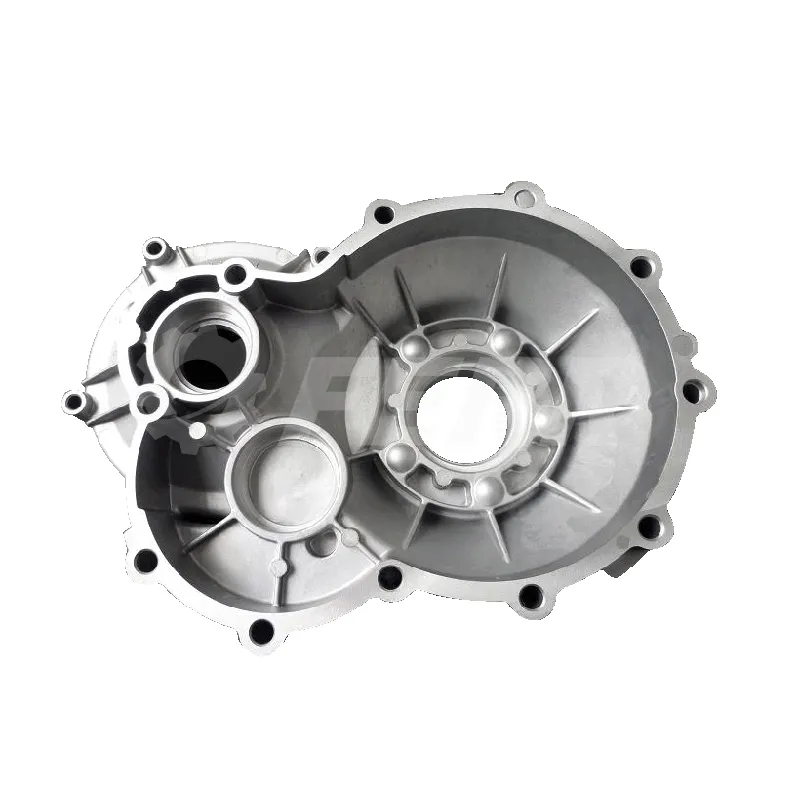
- Excellent for thin-wall, complex parts such as motor housings, gearbox covers, and structural brackets
- The main concern is porosity; vacuum die casting can reduce this.
Vacuum die casting
A variant of high-pressure die casting where a vacuum is drawn in the die cavity before injection.
- Lower porosity and better mechanical properties
- More suitable for pressure-tight parts such as pump bodies and certain hydraulic components
Sand casting
Sand casting involves pouring molten aluminum into a sand mold that is destroyed after each use. This method stands out for its low tooling costs, flexible size range, and rapid turnaround—a distinct advantage for prototypes or low-volume runs versus other methods. Consider sand casting for quick adaptation needs or when intricate designs make traditional die casting impractical.
- Low tooling cost and very flexible for size and shape
- Good for prototypes, large parts, and low-volume series
- Surface rougher and tolerances looser than die casting.
Permanent-mold casting
Molten aluminum is poured by gravity into a reusable metal mold.
- Better mechanical properties and dimensional stability than sand casting
- Suitable for medium-volume production and thicker-wall parts
- Often used for wheels, suspension arms, and various housings.
Low-pressure die casting
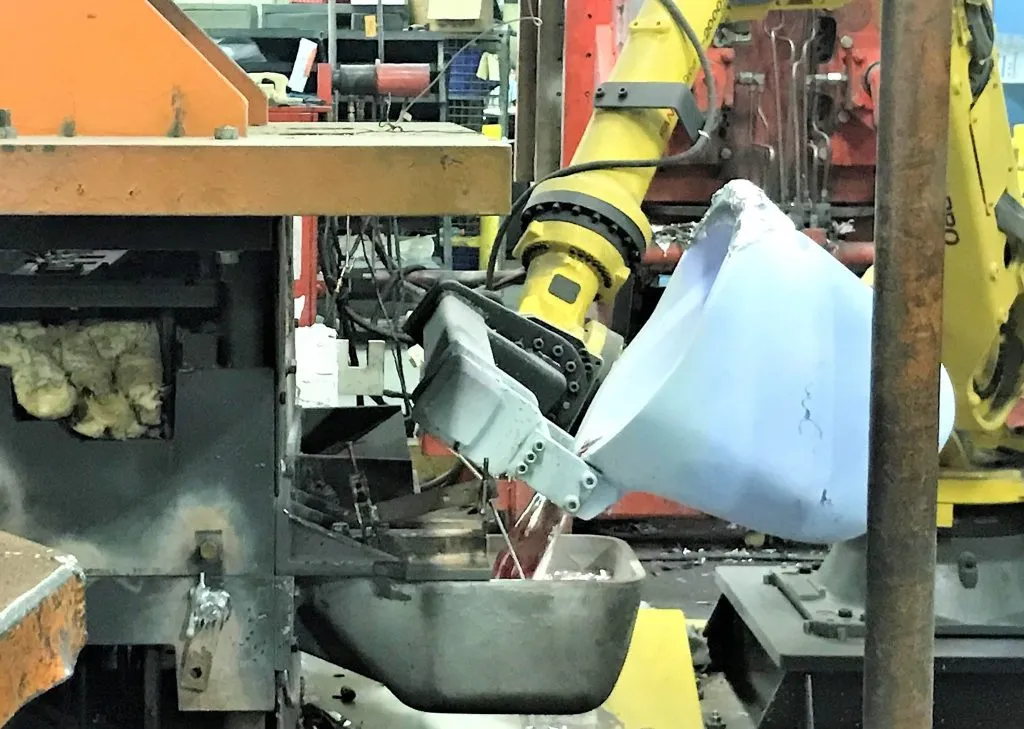
Unlike gravity die casting, where molten metal pours down and can generate turbulence, low-pressure die casting pushes molten metal into the mold under low gas pressure. This smoother upward filling minimizes turbulence and defects, resulting in castings with improved dimensional accuracy and fatigue strength. The controlled flow also reduces internal stress, making low-pressure die casting advantageous for parts that demand long-term durability and structural integrity.
- Fills the mold more smoothly than gravity, with fewer defects
- Common for safety-critical automotive wheels and thicker structural parts
Investment casting
Wax patterns are coated with ceramic, the wax is melted out, and aluminum is poured into the ceramic shell.
- Very high detail and good surface finish
- Suitable for complex shapes that are hard to machine or die-cast
Lost-foam casting
A foam pattern is buried in sand; when metal is poured in, the foam evaporates.
- Allows complex shapes in one piece
- Tooling can be simpler, but process control is more demanding.
Shell-mold casting
A thin “shell” mold is made by applying resin-coated sand to a heated pattern.
- Better surface finish and accuracy than conventional sand casting
- Good for medium-size, medium-volume parts
Ceramic-shell casting
Similar in concept to investment casting, but using ceramic shell systems optimized for higher temperature stability and surface quality.
- Good for intricate shapes and fine details
- Often used when high-dimensional accuracy is needed.
Plaster-mold casting
Plaster replaces sand as the mold material.
- Captures fine detail, supports thin walls
- Mainly used for smaller, complex shapes and prototype work.
Centrifugal casting
Molten metal is poured into a rotating mold. Centrifugal force distributes the metal.
- Ideal for bushings, rings, and tubes
- Produces dense, fine-grained sections near the outer surface
Open-mold casting
The metal is poured into a simple open mold or cavity.
- Used for very simple shapes, artistic castings, or large blocks
- Less common for precision industrial parts
For most industrial buyers, the main decision is usually between high-pressure die casting, low-pressure or gravity casting, and sand casting, then using the more specialized methods when geometry or performance demands it.
What alloys are used in aluminum casting?
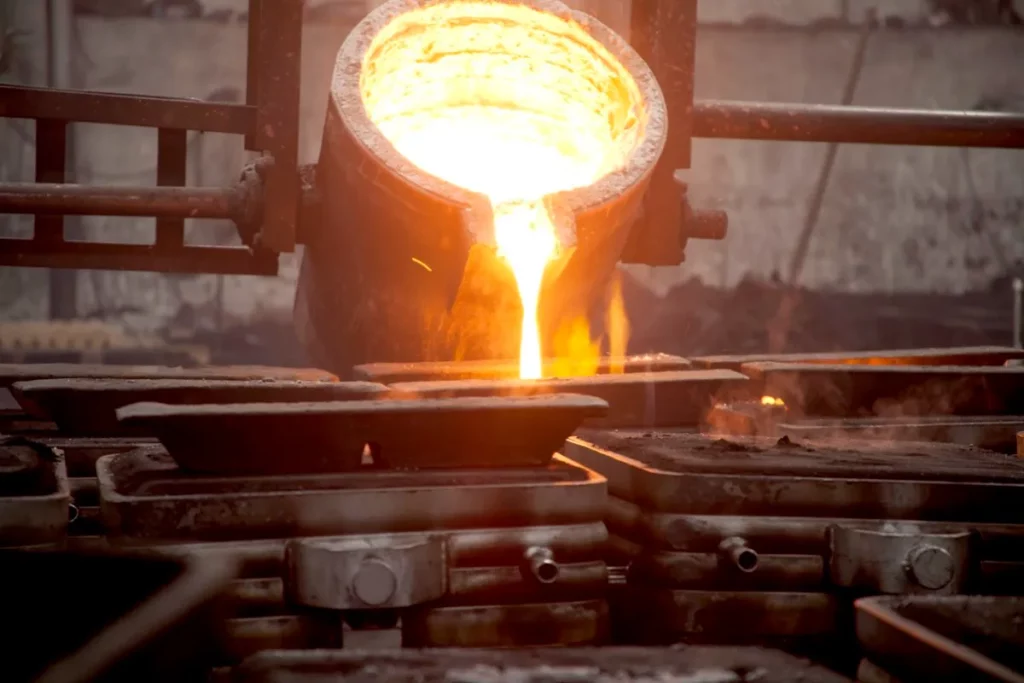
Different aluminum casting alloys are selected based on their balance of functional targets, such as strength versus conductivity. This helps manufacturers make informed choices in projects with varied mechanical and physical requirements. For example, when choosing between A356 and A380 alloys for automotive parts, a buyer might select A356 for better corrosion resistance and elongation, while A380 is preferred for better castability and higher room-temperature strength.
Typical casting alloys include:
- Al-Si alloys (e.g. A356, A380, ADC12)
- Silicon improves fluidity and reduces shrinkage.
- Widely used in die casting and gravity casting.
- Good combination of castability, strength, and corrosion resistance.
- Al-Si-Cu and Al-Si-Mg alloys
- Add copper or magnesium for higher strength and heat-treatability.
- Used for components that need better mechanical properties after T6 heat treatment, such as automotive suspension parts and structural brackets.
- Al-Mg alloys
- Better corrosion resistance, especially in marine environments.
- Lower density but more difficult to cast; used when corrosion performance is critical.
In real projects, the alloy is usually chosen based on these decision checkpoints:
Do the required mechanical properties meet the tensile strength, yield strength, and elongation needed for the project?
- Do the wall thickness and part geometry accommodate fluidity and mitigate hot-tearing risk?
- Will the service environment handle the expected temperature, corrosion, and fatigue conditions?
- Is there a need for heat treatment or welding?
A qualified foundry can help match your requirements to the appropriate alloy.
Can materials other than aluminum be cast?
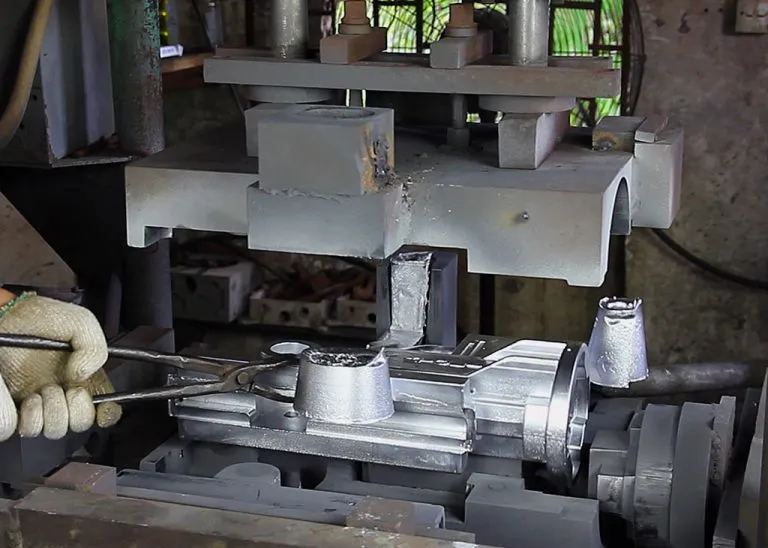
Yes. Casting technology is not limited to aluminum. Many ferrous and non-ferrous metals can be cast, such as iron, steel, copper alloys, magnesium, and zinc.
However, this article focuses on aluminum casting because it is the most common choice when you need:
- Lightweight components
- Good corrosion resistance
- Good machinability and conductivity
- Reasonable strength at a competitive cost
Why is aluminum casting important?
Aluminum casting is important because it allows manufacturers to combine complex geometry with lightweight material at scale. It sits between cheap sheet-metal parts and expensive, fully machined components.
Key properties of cast aluminum parts
When you choose a suitable alloy and process, cast aluminum parts offer a useful mix of properties:
- Tensile strength and stiffness
Cast aluminum alloys can reach sufficient tensile strength for many structural applications, especially after heat treatment (e.g., T6). For many housings, brackets, and frames, the strength-to-weight ratio is good enough to replace steel. - Durability and fatigue performance
While their fatigue strength is generally lower than that of forged alloys, properly designed aluminum castings with controlled porosity and good surface quality can withstand millions of load cycles in automotive and industrial applications. - Heat resistance
Certain alloys retain their strength at medium temperatures, making them suitable for engine parts, motor housings, and heat sinks. At very high temperatures, aluminum loses strength faster than steel, which is one of the trade-offs discussed later.
Because of this combination, aluminum casting is often the most cost-effective way to build lightweight mechanical systems in large volumes.
How long does the aluminum casting process take?
From a buyer’s point of view, “How long does it take?” usually means from drawing to mass production. A typical aluminum casting project goes through these stages:
- DFM review and quotation – 3 to 7 days Supplier analyses your drawings, suggests process and alloy, and gives a quotation.
- Tooling design and manufacture – 2– to weeks
- For die casting, permanent molds, and some gravity casting, steel tooling must be machined and fitted. Sand casting requires simpler patterns and can be faster. Re-tooling loops can extend this phase and should be anticipated in project timelines. To minimize retooling delays, buyers can conduct a thorough design for manufacturability (DFM) review and ensure clear, detailed specifications at the outset. This planning step helps identify possible design issues early and reduces the likelihood of costly revisions later.
- Sampling and trial production – 1 to 3 weeks. First samples are cast, machined, and inspected.
- Dimensions, porosity, mechanical properties, and surface finish are checked. Re-tooling or design revisions may be necessary if initial specifications are not met. You may request changes to gate design, cooling, or machining.
- Alloy qualification may also introduce delays if additional testing or certification is required before moving to mass production. Keeping these factors in mind can help you set realistic timelines and prepare contingency plans.
- Mass production – recurring
- Once samples are approved, the foundry can move to stable production.
- Cycle time per part depends on the process:
- High-pressure die casting: seconds per shot
- Low-pressure and gravity casting: tens of seconds to minutes.
- Sand casting: several minutes or more per piece
For a new die-cast aluminum part, 8–12 weeks from PO to first mass-production shipment is common. Sand-cast prototypes can be faster, but consistency and surface quality will be lower.
What are the different applications of aluminum casting?
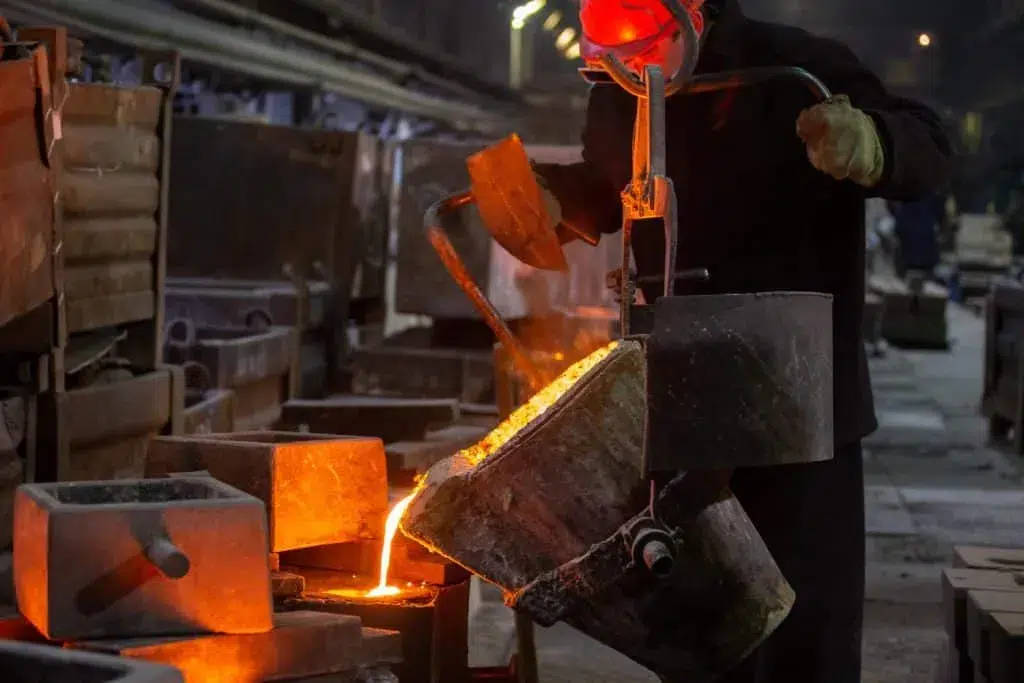
Because of their combination of low weight, corrosion resistance, and reasonable strength, aluminum castings are used in almost every industry.
Construction
In construction and architecture, aluminum castings are used for:
- Structural connectors and brackets
- Curtain wall and window components
- Guardrail and handrail fittings
- Decorative elements
They provide corrosion resistance in outdoor environments, reduce structural weight, and allow the fabrication of complex shapes that are difficult to fabricate from sheet metal.
Aerospace
The aerospace sector needs low weight and high reliability. Cast aluminum is used for:
- Instrument housings and actuator bodies
- Non-critical structural brackets and supports
- Cabin interior fittings and seat components
Safety-critical primary structures still rely on forged or wrought materials, but precision aluminum castings cover much of the secondary structures.
Food and beverage industry
In food and beverage processing equipment, cast aluminum appears in:
- Pump and valve bodies
- Mixer housings and covers
- Frames and guards for conveyors and packaging machines
Two questions usually arise here: hygiene and direct contact with food or beverages.
- Equipment components
For machinery, cast aluminum is safe when:- Alloys meet relevant standards for food-related use.
- Surfaces are properly finished (machined, polished, anodized, or coated) to avoid pits that trap residues.
- Cleaning procedures follow industry requirements.
- Drinking from a cast aluminum cup – is it safe?
Modern cast aluminum cups or mugs, made from suitable alloys and properly finished or coated, are safe for drinking water and most everyday beverages. Points to keep in mind:- Use products designed and certified for food contact, not uncoated industrial parts.
- Avoid storing acidic or salty liquids in bare aluminum containers for long periods, as this can accelerate corrosion and slightly increase metal migration.
- Many producers use anodizing or food-grade coatings on the inner surface to further reduce contact and improve cleanability.
Used this way, a cast aluminum cup is safe for everyday use, such as drinking water, tea, or coffee.
Technology and home appliances
Aluminum casting is widely used in electronics and household appliances:
- Motor and fan housings
- Heat sinks for power electronics
- Structural frames in washing machines, air conditioners, and power tools
Its thermal conductivity, shielding behavior, and machinability make it ideal for complex, compact designs.
Automotive industry
The automotive industry is one of the largest users of aluminum castings. Typical parts include:
- Engine blocks and cylinder heads for certain engines
- Gearbox housings and transmission cases
- Suspension arms, steering knuckles, and wheel hubs
- EV motor housings and battery pack components
These applications push foundries to maintain stable processes that ensure porosity control, dimensional accuracy, and reliable mechanical properties in every batch. What advantages does aluminum casting offer?
From a buyer’s perspective, aluminum casting offers several practical advantages.
High strength-to-weight ratio
Compared with steel castings, aluminum castings provide useful strength at about one-third the density. That means lighter machines, lower fuel consumption, and easier handling.
Lightweight but strong
Wall thickness can be reduced while meeting strength requirements, especially with high-pressure die casting and optimized rib design. mensional accuracy and surface finish
Processes like high-pressure die casting and investment casting give:
- Tight tolerances
- Thin walls
- Smooth surfaces that may need minimal machining or polishing
Durable in variable and low-load conditions
For many housings and covers that experience mainly static or low-dynamic loading, aluminum castings can last for many years without fatigue failure.
High precision and easy machining
Aluminum is relatively soft compared with steel, so:
- Machining is fast, and tool wear is low.
- Holes, threads, and sealing surfaces can be easily finished after casting.
Suitable for mass automation
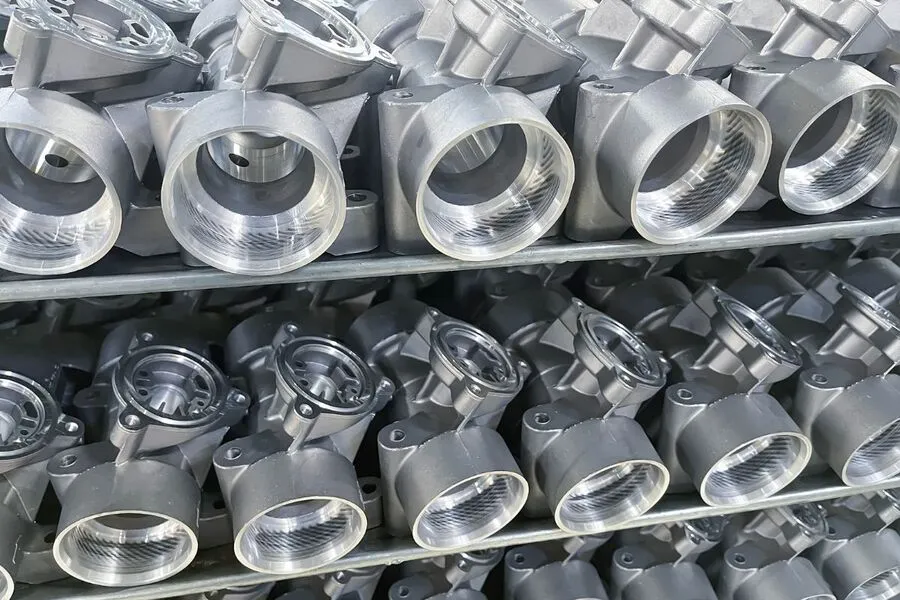
The casting machines, automatic ladling, trimming, and machining cells enable the production of thousands of parts per day with consistent quality. This is why automotive and appliance manufacturers rely on aluminum die casting.
High thermal and electrical conductivity
Aluminum conducts heat and electricity well, so cast parts are ideal for:
- Heat sinks and motor housings
- Electrical enclosures and components that need good grounding
Good corrosion resistance, even in marine environments
Many casting alloys show good resistance to atmospheric and marine corrosion, especially when combined with:
- Proper alloy selection
- Anodizing or coating
- Good drainage and design details
Recyclability
Aluminum is recyclable without losing key properties. Scrap can be remelted and reused, reducing environmental impact and, in some cases, material costs.
What are the limitations of aluminum casting?
No process is perfect. Aluminum casting also has limitations you should understand before choosing it.
Moderate fatigue strength
Compared with forged aluminum or steel, cast aluminum usually has:
- More internal porosity and micro-defects
- Lower fatigue strength
For highly cyclic-loaded, safety-critical components, this may be a concern. Proper process control, vacuum die casting, and thoughtful design are important. To avoid common fatigue issues in castings, use generous fillet radii to minimize stress concentrations and maintain optimal wall thicknesses to balance strength and weight. Also, avoid sharp corners in your designs to further reduce stress concentrations. resistance
Aluminum alloys have relatively low hardness and wear resistance. For sliding or heavily loaded bearing surfaces, you may need:
- Hard anodizing
- Steel inserts or bushings
- Special surface coatings
Limited load-bearing on certain surfaces
As a structural support or sliding contact surface, aluminum alone may not provide enough load-bearing capacity, especially at high temperatures. Steel inserts or thicker sections are commonly used to address this issue.
Medium temperature stability
At temperatures above roughly 150–200 °C, many aluminum casting alloys lose strength more quickly than steels. For high-temperature applications, use heat-resistant alloys or other materials to maintain performance.
Understanding these limitations helps you decide where aluminum casting is suitable and where another process or material is safer. When fatigue strength and wear resistance are critical, or when high-temperature environments are a factor, buyers should consider alternatives such as forging, steel, or other materials. Forging offers higher mechanical performance and better fatigue resistance, though it may require more complex tooling and limited shape options.
FAQ
What is the difference between aluminum casting and forging?
Aluminum casting shapes the metal while it is in its liquid state. The molten alloy fills a mold and solidifies. This allows:
- Very complex shapes with internal cavities
- Thin walls and integrated features
- Lower material waste and good suitability for mass production
However, the grain structure is less oriented, and porosity can reduce fatigue strength.
Aluminum forging deforms solid metal under high pressure. It:
- Produces a refined, oriented grain structure
- Offers higher strength and better fatigue performance
- Usually has better impact resistance.
But:
- Part geometry is more limited.
- Tooling can be complex.
- More machining is often needed.
In practice, you choose casting when shape complexity, weight reduction, and cost are the priority, and forging when peak mechanical performance is critical.
Can materials other than aluminum be cast?
Yes. Casting technology is not limited to aluminum. Many ferrous and non-ferrous metals can be cast, such as iron, steel, copper alloys, magnesium, and zinc.
However, this article focuses on aluminum casting because it is the most common choice when you need:
- Lightweight components
- Good corrosion resistance
- Good machinability and conductivity
- Reasonable strength at a competitive cost
Is aluminum casting more expensive than iron casting?
The answer depends on the part and requirement:
- Material cost: aluminum alloy is usually more expensive per kilogram than cast iron.
- Weight: aluminum parts are lighter, reducing material usage.
- Tooling and process: die-casting tooling for aluminum can be more expensive than sand-casting tooling for iron, but cycle times are faster.
- Finishing: machining aluminum is usually cheaper than machining iron because it is easier to cut.
For lightweight, high-precision parts, aluminum casting is often more cost-effective than achieving the same performance with iron. For very heavy, thick-wall components where weight is not important, iron casting can be cheaper.