
Choosing a welding machine means matching your materials, needs, processes, and budget. For industrial buyers, the aim is not just to weld, but to ensure stability under continuous use, suitable processes, and consistent joint quality with minimal rework.
The right machine depends on your primary welding method—MIG, TIG, Stick, or Multi-process—and on the duty cycle, output, and safety features your facility requires. This guide follows a decision path to help you select a model without unnecessary complexity: define requirements, compare brands, and confirm specifications. For example, in automotive frames, prioritize a high-duty-cycle MIG welder for production. Clear steps make selection efficient. To begin, let’s break down the key requirements you should define first.
Define Your Requirements
Selecting welding machines for industrial use requires a needs-driven approach. Clarifying these questions upfront helps you avoid buying equipment inadequate for production demands. Next, consider how your available budget impacts your options and the reliability of your machine.
Within budget
For industrial MIG/TIG applications, entry-level hobby machines are inadequate for continuous use or for high-heat applications. Invest in a machine with a 40-60% duty cycle at your working amperage for reliable, long-run performance.
Focus on:
- Stability of arc under long cycles
- Spare parts availability and after-sales support
- Calibration and serviceability matter. Brands like Lincoln, Miller, and ESAB are known for reliable performance. Well-supported brands reduce downtime and overall cost.
Consider safety
Industrial welding requires machines with:
- Overheat protection
- Voltage fluctuation protection
- Gas safety interlocks (MIG/TIG)
- Stable starts and anti-stick features
Safety features directly affect weld quality and operator reliability.
Is relocation necessary?
If welding takes place across the facility or at job sites, weight and portability matter.
TIG machines with AC for aluminum are heavier. MIG units with large feeders are less portable.
Determine early in your decision process whether mobility is a primary requirement for your operation.
Space occupied
Industrial wire feeders and gas cylinders require dedicated space.
A compact inverter model (which uses electronic circuitry instead of a heavy transformer to reduce size and weight) saves space, but check whether its output is sufficient for your plate thickness. Next, let’s consider how your purchasing decision-making process should prioritize fit for purpose over price.
Price
Purpose matters more than price.
A cheaper machine may:
- Overheat faster
- Produce inconsistent weld beads.
- Deliver unstable arc performance.
- Increase rework and scrap rates.
In industrial production, machine stability and a suitable duty cycle save more money over time than opting for cheaper equipment. Beyond price, you must also align the machine’s input and output requirements with your facility’s needs.
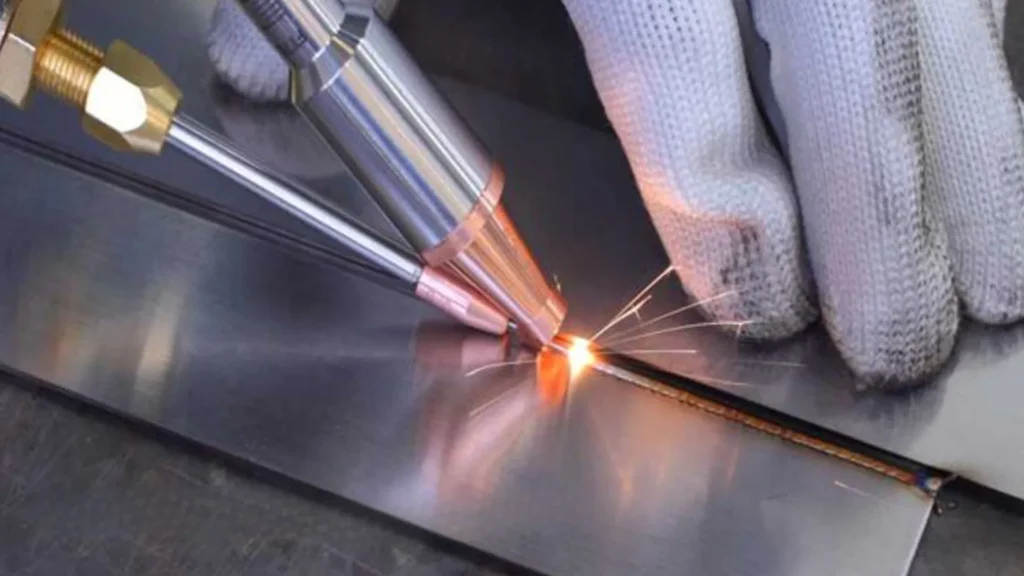
Evaluating the functionality of welding machines
Input & Output Requirements
Check whether your facility uses 110, 220V, 380V, or 415V. To simplify decision-making, use 380V or higher for plates over 8 mm thick.
Higher voltage is required to handle heavier loads and thicker materials. Output considerations: (Output means the amount of welding current the machine can deliver.)
- MIG: requires sufficient amperage (current, measured in amps) for your wire size and plate thickness. TIG: needs stable low-amp control (precise adjustment at low currents) for thin stainless steel and AC capability (alternating current function) for aluminum.
- Stick: must support your electrode diameter (thickness of the welding rod). Underpowered machines lead to a lack of fusion (incomplete joining), poor penetration (shallow welds), and unpredictable strength.
Duty Cycle
Industrial buyers should treat the duty cycle as a primary metric.
If the machine states “60% @ 200A,” it means:
- Out of 10 minutes, it can weld 6 minutes at 200A
- The remaining 4 minutes are cooling.
Low duty cycles cause more downtime and less consistency.
For MIG/TIG production welding, choose machines with a duty cycle of 40–60% at your working amperage.
User-Friendly Design
A machine operators who adjust quickly reduces errors.
Key usability factors:
- Clear amperage and voltage display
- Precise adjustment knobs
- Memory presets for recurring jobs.
- Smooth arc start
- Intuitive wire-feed controls (MIG)
User-friendly does not mean simplified; it means a machine that operates efficiently and with minimal effort during production. Imagine a welding machine with an intuitive digital interface and a quick-access menu for preset configurations tailored to common tasks. An operator can quickly select a welding mode, adjust parameters, and begin work within seconds, ensuring speed without sacrificing precision. Many manufacturers and industry organizations offer training and certification for these advanced interfaces, ensuring operators are prepared to use the new technology. This helps smoother integration and improves overall productivity and safety standards in your facility.
Safety Features
Look for:
- Over-temperature protection
- Over-current/over-voltage protection
- Stable arc start
- VRD (Voltage Reduction Device) for Stick welding
- Gas flow safety for MIG/TIG
Stable current protects both welders and parts. With a clearer view of safety, let’s now break down how various welding processes align with typical material thickness requirements.
Welding Processes & Typical Material Thickness
Most buyers err by choosing a machine without knowing the process.
Below is a process-level decision guide。
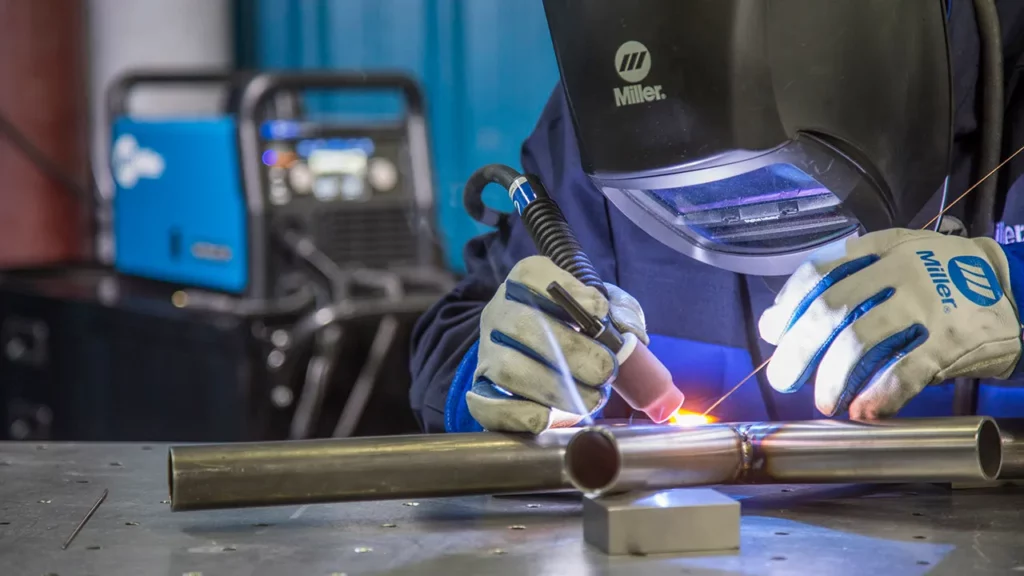
Different Types of Welding Machines
MIG Welders
MIG welders offer efficiency, consistent beads, and easy use.
Advantages
- High productivity for carbon steel fabrication
- Easy for operators to learn and maintain stable bead quality
- Suitable for thin to medium-thickness materials (1–10 mm)
- Continuous wire feed supports long welds with fewer stops.
- Good for repetitive industrial production
Disadvantages
- Less ideal for precision welding
- Not suitable for very thin stainless steel without advanced pulse control
- Requires shielding gas and wire feeder space
- Can produce more spatter
Best suited for: general fabrication, frames, brackets, automotive parts, machinery components.
TIG Welders
TIG machines excel where appearance and integrity matter.
Advantages
- Produces the cleanest, strongest, and most precise welds
- Excellent for stainless steel, thin metals, and aluminum (AC TIG)
- Full control over heat input
- Ideal for high-spec industrial components
Disadvantages
- Slower than MIG → lower throughput
- Requires skilled operators
- AC-capable TIG machines cost more.
- Not ideal for thick sections without high amperage
Best suited for: stainless steel tanks, precision parts, high-value weldments, and aluminum components.
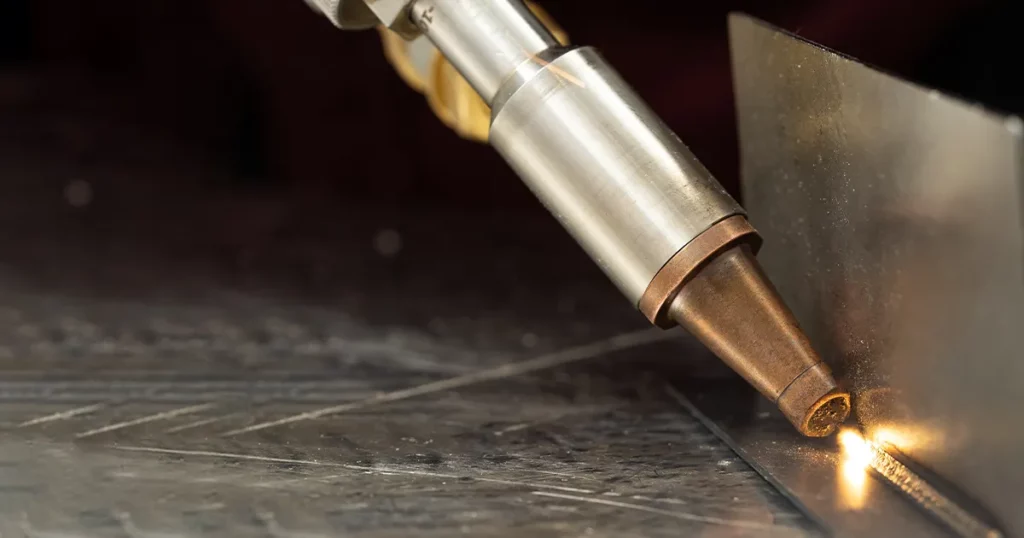
Stick Welders
Advantages
- Works well outdoors; less sensitive to wind.
- Simple setup
- Good penetration on thick materials
Disadvantages
- Slower and less clean
- Requires skilled operators
- Produces slag and a higher post-processing time
Used mainly for maintenance, construction, and heavy steel sections.
Spot Welders
Advantages
- Fast and strong joints for sheet metal
- Ideal for automotive and enclosure manufacturing
Disadvantages
- Limited to thin sheets
- Not versatile
Multi-Process Welders
Advantages
- Combines MIG/TIG/Stick in one unit
- Good for workshops needing flexibility
Disadvantages
- Not all functions perform as well as dedicated machines.
- Duty cycles for multi-process machines may be lower, requiring more cooldown periods and increasing downtime. Weigh the benefits of flexibility against the potential reduction in throughput during intensive production to determine whether these machines meet your operational needs.
Inverter Welders
Advantages
- Lightweight and efficient
- Better arc stability
- Energy-saving
Disadvantages
- Sensitive to dust, moisture, and voltage spikes
FAQ
How do I choose welding electrodes?
The selection of electrodes primarily depends on:
- Base metal type
- Required penetration
- Desired bead appearance
- Welding position
- Strength requirement
General rules:
- E6013 → general fabrication
- E7018 → structural welds needing higher strength
- E308/316 → stainless steel
Match electrode strength to the base material to avoid brittle joints (joints that can break easily).
How to calculate welding current?
A simple guideline:
- MIG: ~30–40A per 1 mm of material thickness
- TIG: lower heat input → ~20–30A per 1 mm
- Stick: based on electrode diameter
- 2.5 mm → ~70–90A
- 3.2 mm → ~90–120A
Always tune based on bead shape:
- Too cold → lack of fusion
- Too hot → burn-through or excessive heat-affected zone
- If the weld results are too hot or too cold, adjusting the current or travel speed can often resolve the issue. If the weld is burning through, decrease the current or increase travel speed. If there is a lack of fusion, increase the current or slow down travel speed. Keeping these troubleshooting steps in mind helps buyers anticipate and resolve common issues.